Why a list of its own
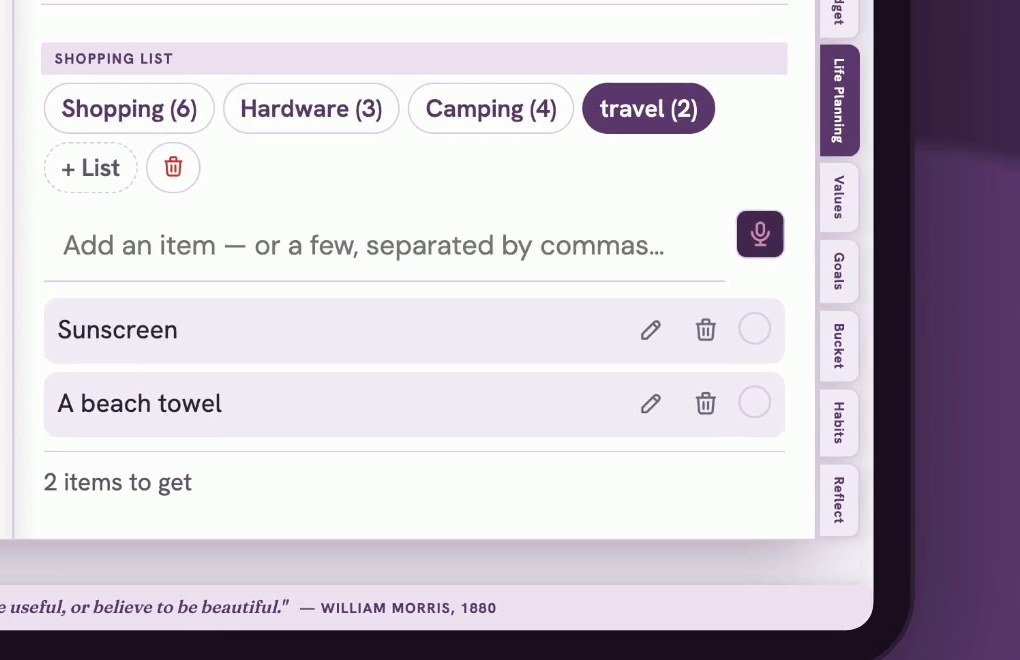
Not every list is groceries. A trip, the hardware store, a party: each has its own things to get, and its own moment to get them. Give each list its own name and it opens on its own. At the hardware store, it’s only the hardware.
How to say it
- “Add sunscreen and a beach towel to my travel list.”
- “Add nails and a paintbrush to my hardware list.”
- “Add napkins and candles to my party list.”
Say a list’s name and the list is made on the spot, with the items already in it. Several things in one breath: separate them with “and”, commas or “plus”.
What the research says
Psychologists call it cognitive offloading: using a note, a reminder or a list to take load off your mind. In one study of more than a thousand people, those who used reminders were better at remembering to do things later, and interruptions stopped tripping them up. The honest part: in a real-world task up to a week later, the link with reminders was weak.
On which plan
Named lists are on Premium. The free plan holds one working list, and naming a second offers the upgrade.
Sources
- Risko, E. F., & Gilbert, S. J. (2016). Cognitive offloading. Trends in Cognitive Sciences
- Gilbert, S. J. (2014). Strategic offloading of delayed intentions into the external environment. Quarterly Journal of Experimental Psychology
- The VoiceFirstPlanner Voice Command Guide, Daily Planning 4 of 12
Not sure where to go next?
Start here: eleven reasons on one page →